

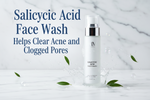
How Salicylic Acid Face Wash Helps Clear Acne and Clogged Pores
, by Hemant Shah, 6 min reading time
, by Hemant Shah, 6 min reading time
If breakouts keep showing up in the same spots no matter how many products you try, the issue is often clogged pores rather than a lack of skincare effort. Salicylic acid face wash is one of the few cleansers dermatologists consistently recommend for this exact problem, because it works inside the pore rather than just on the surface. This guide explains how salicylic acid actually clears acne, why it works differently from regular cleansers, and how to choose a strength and formula that suits your skin without causing new irritation.
Salicylic acid is a beta-hydroxy acid, which means it is oil-soluble and can penetrate the sebum in a pore. Once inside, it helps break down the buildup of dead skin cells and excess oil that leads to blackheads, whiteheads, and inflamed pimples. This is different from most face wash ingredients that only clean the skin's surface, which is why salicylic acid is often the first recommendation for mild to moderate acne.
It also has a mild anti-inflammatory effect, which can calm redness around active breakouts while unclogging pores.
Because salicylic acid is oil-soluble, it penetrates the pore lining and loosens the mixture of oil, dead skin, and debris that causes blockages. Over consistent use, this reduces the frequency of new blackheads and whiteheads forming.
A well-formulated salicylic acid face wash, like Saslic DS Foaming Face Wash, is designed to manage excess sebum while maintaining a skin-friendly pH, helping prevent dryness and irritation that harsher acne washes can cause.
Regular use trains pores to stay clearer over time, rather than just treating existing breakouts. This is one reason dermatologists suggest sticking with a salicylic acid cleanser for several weeks before judging whether it is working.

Most over-the-counter face washes contain salicylic acid in the 0.5 to 2 percent range, which is generally enough for daily use without excessive dryness. Higher concentrations are found in spot treatments or professional formulas, but these are usually meant for targeted use rather than for daily full-face cleansing.
Products like Acnecross Acne Foaming Face Wash combine salicylic acid with a foaming base to manage oil production throughout the day, making it a practical daily option for consistently oily skin.
Curatio Fash Foam Face Wash is formulated at a skin-friendly pH of 5.5, making it a gentler entry point for those who want the benefits of salicylic acid without the tightness some stronger formulas can cause.
At KarissaKart, we stock a range of salicylic acid products because acne rarely responds to a single step. Saslic DS Foaming Face Wash is our most recommended daily cleanser for oily, breakout-prone skin, since it pairs salicylic acid with a balanced pH to exfoliate without stripping the skin. For people who want a more complete routine, Sebonac Gel from Glowderma extends the same active ingredient into a leave-on treatment, working alongside the cleansing step rather than replacing it.
If breakouts are paired with acne marks or uneven tone once the pimples clear, our article on Kojic Acid vs Vitamin C for pigmentation covers how to address the marks left behind, which is often the next concern once active acne is under control. And for anyone managing both oiliness and sensitivity, comparing formulas in our Foaming vs Gel Face Wash guide can help determine whether a foaming salicylic acid wash or a gentler alternative is a better fit.
This type of cleanser generally suits people with oily skin, frequent blackheads or whiteheads, or mild to moderate acne that has not responded well to a basic cleanser. It is less necessary for very dry or highly sensitive skin, where a gentler gel cleanser paired with a targeted spot treatment may work better without the risk of overdrying.
People with very dry, eczema-prone, or highly reactive skin should introduce salicylic acid gradually, starting with a few uses per week rather than daily application. Anyone who is pregnant or breastfeeding should check with a doctor before regular use of salicylic acid products, since guidance varies based on concentration and frequency of use.
Salicylic acid is generally considered safe for topical use, but overuse can lead to dryness, flaking, or increased sun sensitivity. Daily sunscreen is important when using any exfoliating acid, since treated skin burns more easily. If irritation continues beyond the first couple of weeks, or if breakouts do not improve after a month of consistent use, a dermatologist can help determine whether a different concentration or ingredient combination is needed.
This article offers general skincare information and is not a substitute for a dermatologist's assessment, particularly for persistent or cystic acne.
Salicylic acid face wash earns its reputation because it treats acne where it actually starts, inside the pore, rather than just cleaning the surface. Choosing the right strength and pairing it with a routine suited to your skin type makes the difference between a cleanser that clears breakouts and one that just dries out your skin without solving the problem. Give it a few weeks of consistent use, watch how your skin responds, and adjust from there.
Q: How long does it take for a salicylic acid face wash to clear acne?
A: Most people notice a reduction in new breakouts within four to six weeks of consistent use, since salicylic acid works gradually on pore buildup rather than clearing existing pimples overnight.
Q: Can I use salicylic acid face wash every day?
A: Yes, for most oily or acne-prone skin types, daily use is fine as long as the formula maintains a balanced pH. Sensitive skin may need to start with three to four uses per week instead.
Q: Does salicylic acid face wash help with blackheads?
A: Yes, because it is oil-soluble, salicylic acid can penetrate the pore lining and loosen the buildup that forms blackheads, making it one of the more effective ingredients for this specific concern.
Q: Can a salicylic acid face wash be combined with other acne treatments?
A: It can, but combining it with other strong actives like retinol or benzoyl peroxide in the same routine can increase irritation, so introducing one active at a time is usually safer.
Q: Is salicylic acid face wash suitable for sensitive skin?
A: It can be, especially at lower concentrations and with a balanced pH, but sensitive skin should patch-test first and watch for signs of dryness or irritation before making it a daily step.
Most people notice a reduction in new breakouts within four to six weeks of consistent use, since salicylic acid works gradually on pore buildup rather than clearing existing pimples overnight.
Yes, for most oily or acne-prone skin types, daily use is fine as long as the formula maintains a balanced pH. Sensitive skin may need to start with three to four uses per week instead.
Yes, because it is oil-soluble, salicylic acid can penetrate the pore lining and loosen the buildup that forms blackheads, making it one of the more effective ingredients for this specific concern.
It can, but combining it with other strong actives like retinol or benzoyl peroxide in the same routine can increase irritation, so introducing one active at a time is usually safer.
It can be, especially at lower concentrations and with a balanced pH, but sensitive skin should patch-test first and watch for signs of dryness or irritation before making it a daily step.

October 02, 2026
Learn about Aziderm 10% Cream, including its azelaic acid 10% composition, acne indication, application instructions, possible side effects, storage and...
Read Article
September 16, 2026
Pharmacies and clinics that skip wholesale medicated skincare products are leaving a steady, high-margin revenue stream on the table. Patients...
Read ArticleDermatology-grade skincare wholesale sourcing in India has become one of the fastest-growing priorities for pharmacies, beauty stores, and clinics as...
Read ArticleA newborn's skin barrier is still developing, which is why...
Read ArticleMost newborns do not need baby lotion in the first...
Read Article